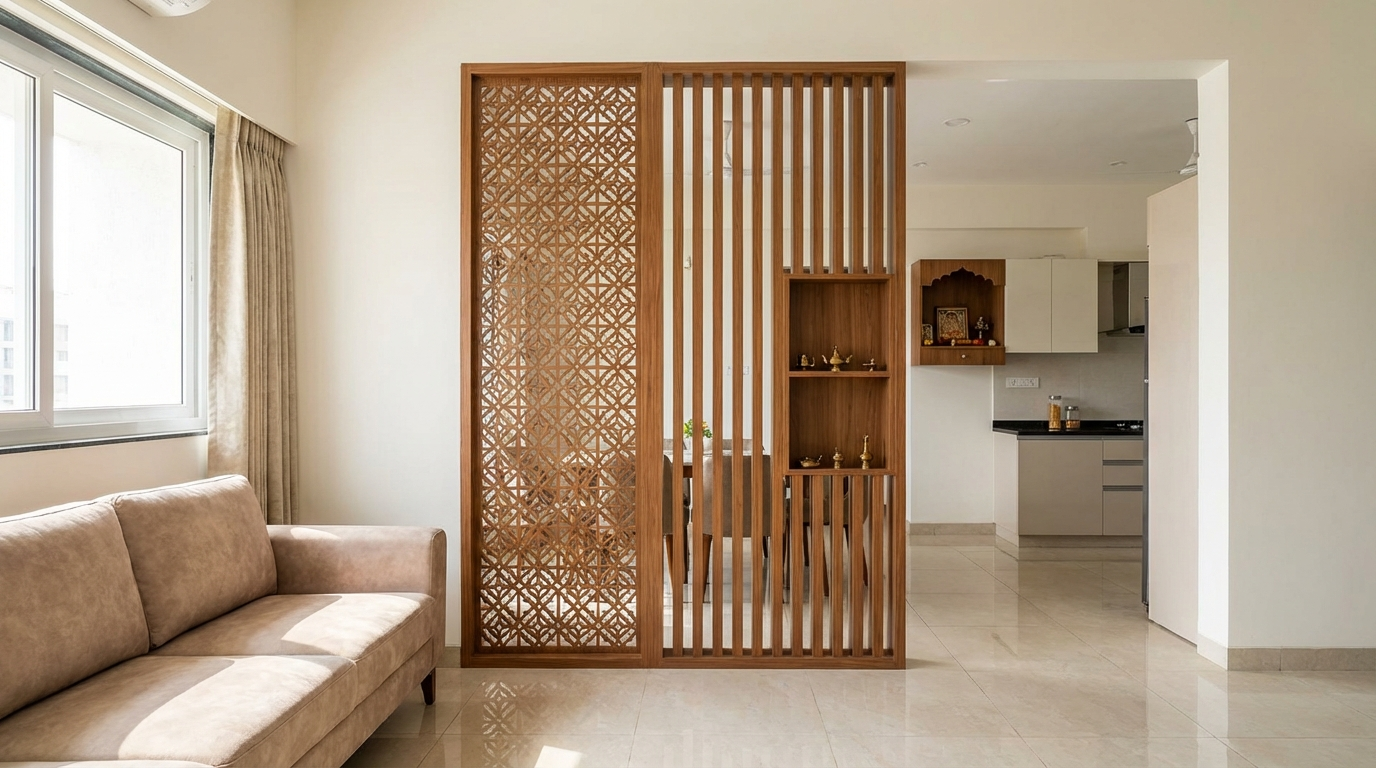
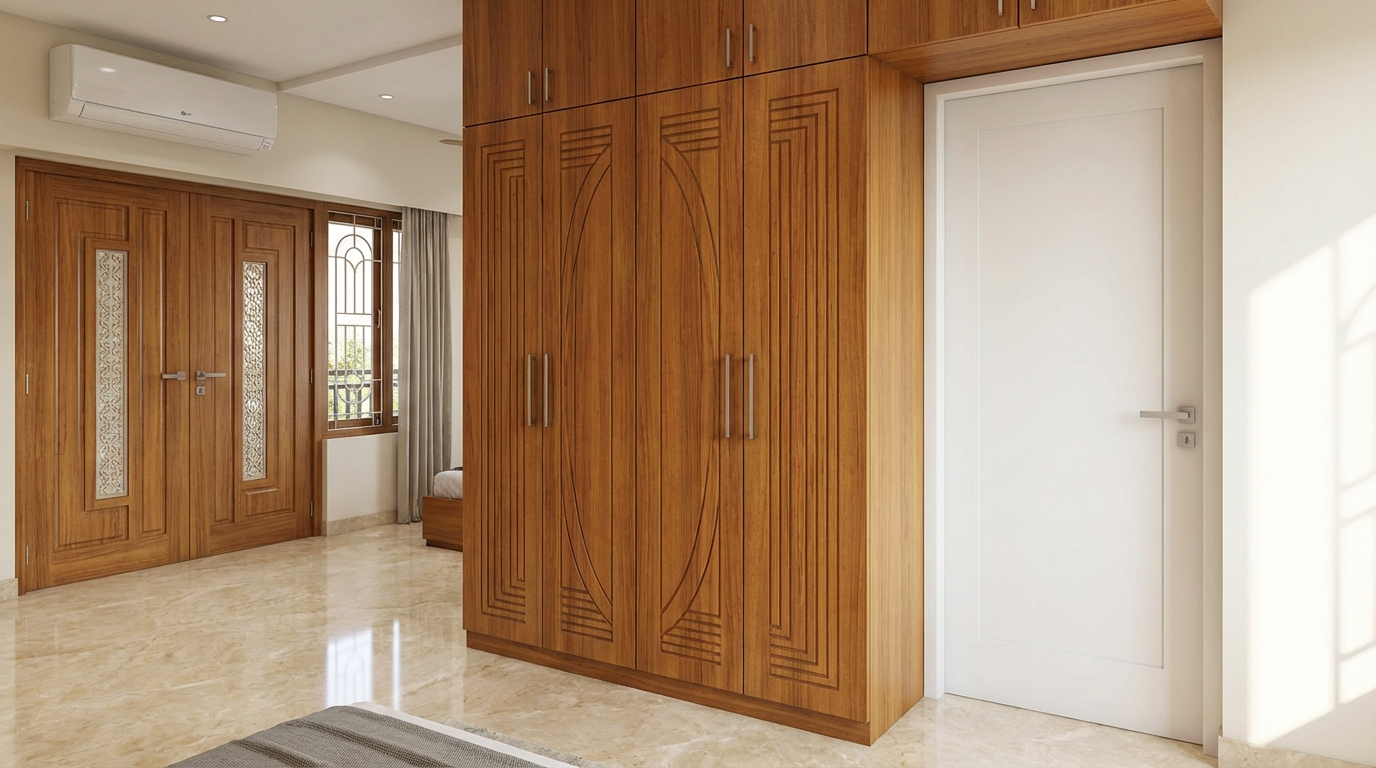
Wpc Doors Catalogue – Complete Guide for Indian Buyers
Research-backed wpc doors catalogue breakdown with pros/cons, tables, and a clear decision checklist for Indian buyers and carpenters.
Note: This is independent informational content and is not affiliated with any manufacturer.
Quick Decision Summary
Best answer in one line: WPC doors combine wood fibers with thermoplastics to deliver waterproof, termite-proof doors ideal for Indian bathrooms, kitchens, and moisture-prone areas.
If you're in a hurry: WPC (Wood Plastic Composite) doors are engineered alternatives to traditional wooden doors, offering complete moisture resistance and zero termite risk. They work exceptionally well in Indian conditions where humidity, monsoons, and pest infestations destroy conventional wood. Expect to pay moderately more than flush doors but significantly less than solid hardwood. For bathrooms and wet zones, WPC is often the most practical long-term choice available in the Indian market today.
- Choose WPC doors if: You need doors for bathrooms, kitchens, balconies, or coastal/humid regions; you want minimal maintenance; you prioritize termite-proof and waterproof performance over natural wood aesthetics.
- Avoid WPC doors if: You need very heavy-duty security doors; you strongly prefer authentic solid wood grain and feel; your budget is extremely tight and you're installing in permanently dry, climate-controlled interiors.
What WPC Doors Actually Are
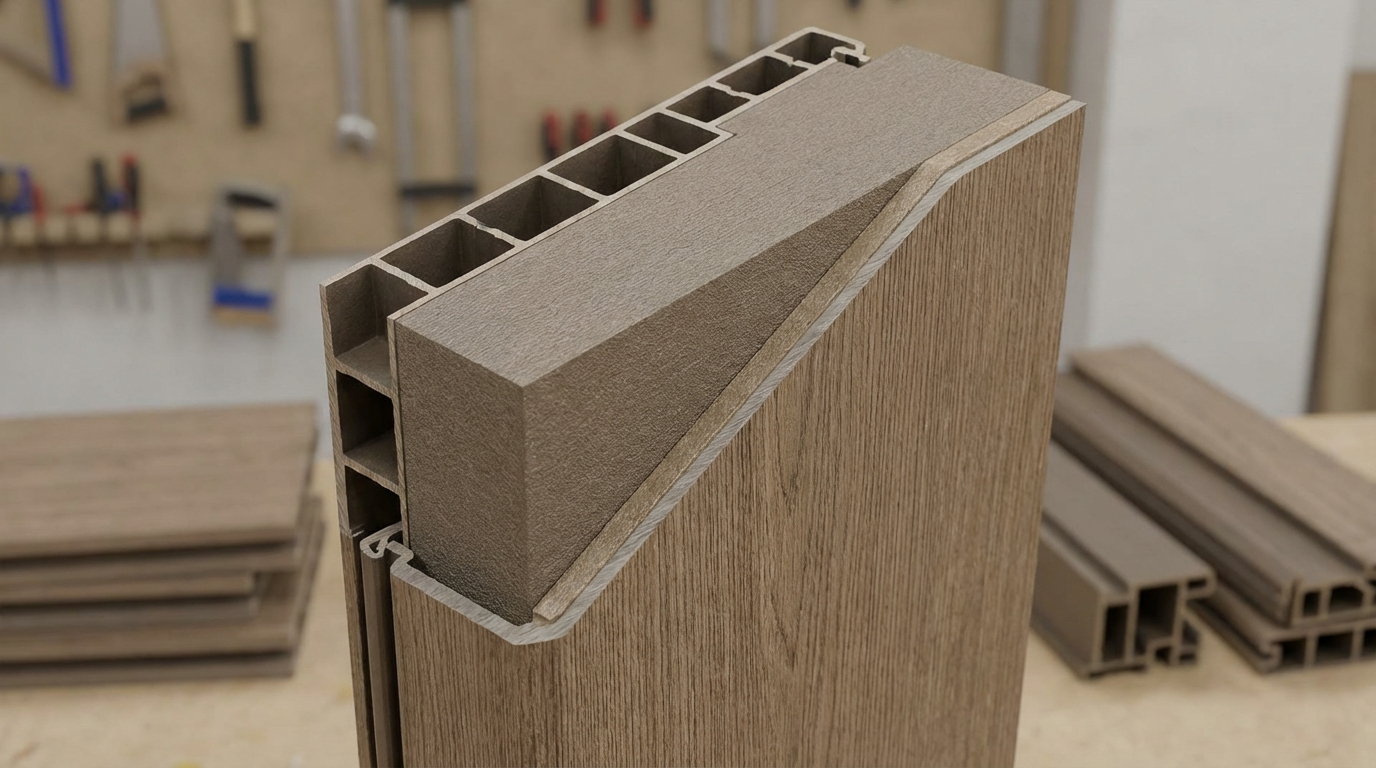
WPC stands for Wood Plastic Composite. These doors are manufactured by combining wood fibers or wood flour with thermoplastics such as PVC, polyethylene (PE), or polypropylene (PP). Additives are mixed in for UV stability, fire retardancy, and anti-fungal properties. The result is a composite material that looks and feels somewhat like wood but performs like engineered plastic in moisture resistance.
WPC doors come in two primary internal structures: solid core and hollow core. Solid WPC doors are denser, heavier, and suited for main entrances or high-traffic areas. Hollow WPC doors are lighter, more affordable, and work well for interior rooms and bathrooms where extreme impact resistance isn't critical.
How is WPC different from PVC and uPVC doors?
WPC contains actual wood content (typically 30-70% wood fiber), giving it better screw-holding capacity and a more natural appearance than pure PVC doors. PVC and uPVC doors are entirely plastic-based, making them lighter but often less rigid and prone to visible flexing over time. WPC offers a middle ground—better structural feel than PVC while maintaining full waterproof characteristics. For Indian buyers, WPC typically commands a 15-30% price premium over standard PVC doors but delivers noticeably better durability and aesthetics.
Why WPC Doors Matter in Indian Homes and Sites
Indian homes face unique challenges that traditional wooden doors struggle to handle. Monsoon humidity regularly exceeds 80-90% in coastal and eastern regions. Even in northern plains, seasonal humidity swings cause wooden doors to swell, stick, and warp. Termite infestations remain endemic across most Indian states, silently destroying wooden door frames and shutters from the inside.
WPC doors address these problems directly. Since the thermoplastic matrix doesn't absorb water, the doors maintain dimensional stability through monsoons. The composite material is completely inedible to termites. This translates to practical benefits: bathroom doors that don't swell shut during rains, kitchen doors that don't rot near sinks, and balcony doors that survive direct weather exposure.
What happens to WPC doors in coastal areas with salt air?
Coastal environments in India—Chennai, Mumbai, Goa, Kerala, Odisha coastline—combine high humidity with salt-laden air that corrodes metal and accelerates wood decay. WPC doors perform well in these conditions because the composite material doesn't rust, rot, or absorb salt moisture. However, metal hardware (hinges, handles, locks) on WPC doors can still corrode. In coastal installations, always specify stainless steel or marine-grade hardware. The door itself will outlast standard wooden alternatives by several years in such environments, but hardware selection determines the complete assembly's longevity.
Types of WPC Doors Available in Indian Markets
Understanding the WPC door catalogue requires knowing the main categories available. Indian markets typically offer these variants:
| WPC Door Type | Core Structure | Typical Thickness | Best Applications | Relative Cost |
|---|---|---|---|---|
| Solid WPC Doors | Dense, no hollow spaces | 30-35mm | Main entrances, high-traffic areas | Higher |
| Hollow WPC Doors | Hollow core with frame | 25-30mm | Bathrooms, bedrooms, interiors | Moderate |
| WPC Flush Doors | Smooth flat surface | 28-32mm | Modern interiors, office spaces | Moderate |
| WPC Laminated Doors | Laminate skin on WPC base | 28-35mm | Decorative applications, retail | Higher |
| WPC CNC Carved Doors | Machine-carved patterns | 30-40mm | Premium homes, pooja rooms | Highest |
| WPC Glass Panel Doors | WPC frame with glass inserts | 30-35mm | Partitions, balconies, living areas | Higher |
Which WPC door type works best for bathroom installations?
For bathrooms, hollow or solid WPC doors in 28-30mm thickness are most commonly used. Hollow core doors are sufficient since bathrooms don't require heavy impact resistance. The key requirement is complete waterproofing, which both types provide equally well. Choose solid core only if you need better sound insulation (master bathroom near living areas) or if the bathroom opens to outdoor spaces where security matters. For typical Indian bathroom sizes (standard 2ft x 6.5ft openings), hollow WPC doors offer the best cost-to-performance ratio. Ensure the door frame is also WPC or moisture-resistant—installing a WPC door on a wooden frame defeats the purpose.
Price Range and Cost Drivers for WPC Doors
WPC door pricing in India varies significantly based on type, brand segment, finish, and your city. Here are typical ranges observed in major Indian markets:
| WPC Door Category | Price Range (per door) | Notes |
|---|---|---|
| Basic Hollow WPC Door | ₹2,500 – ₹4,500 | Standard finishes, bathroom-grade |
| Solid WPC Door | ₹5,000 – ₹9,000 | Higher density, main door suitable |
| WPC Laminated/UV Printed | ₹4,500 – ₹8,000 | Decorative surface treatments |
| WPC CNC Carved Door | ₹8,000 – ₹18,000+ | Custom patterns, premium segment |
| WPC Door Frame (chaukhat) | ₹1,200 – ₹3,500 | Per frame set, varies by profile |
Cost drivers that affect your final bill:
- Density: Higher-density WPC costs more but holds screws better and resists dents
- Thickness: 30mm+ doors command premium over 25mm variants
- Surface finish: UV-printed wood grain, laminated, or CNC-carved surfaces add 20-40% to base price
- Hardware cutouts: Pre-machined handle and lock mortises may be extra
- Delivery location: Tier-2 and Tier-3 cities often see 10-15% higher prices due to logistics
- Order quantity: Bulk orders (10+ doors) typically get 8-15% better pricing
How do I estimate WPC door cost for a complete home?
For a typical 3BHK apartment requiring 6-8 internal doors plus 2 bathroom doors, budget approximately ₹35,000-₹55,000 for mid-range WPC doors including frames. This assumes hollow core for bedrooms, solid or hollow for bathrooms, and basic laminated finishes. Add 15-20% for installation labor (fitting, hardware mounting, minor adjustments). Main entrance doors, if WPC, add another ₹8,000-₹15,000 depending on design complexity. Always get itemized quotes specifying door thickness, density, frame profile, and included hardware cutouts to compare accurately across suppliers.
Practical Use Cases: What Works, What Fails
| Application | Recommended WPC Type | Thickness | Finish Notes | Risk Notes |
|---|---|---|---|---|
| Bathroom doors | Hollow or Solid | 28-30mm | Matte or smooth; easy to clean | Ensure frame is also waterproof |
| Kitchen pantry | Solid WPC | 30mm | Laminated for stain resistance | Check edge sealing near sink zones |
| Bedroom interiors | Hollow WPC | 28-30mm | Wood grain UV print | May feel hollow on knocking |
| Main entrance | Solid WPC or CNC | 32-35mm | Premium finish, carved options | Not as secure as metal-clad doors |
| Balcony access | Solid WPC + Glass | 30-35mm | Weather-resistant coating | Direct sun may cause minor fading |
| Office cabins | Flush WPC | 30mm | Neutral colors, minimal design | Sound insulation limited |
| Pooja room | CNC Carved WPC | 32-40mm | Traditional patterns | Higher cost, needs careful handling |
| Hospital/clinic | Solid WPC Flush | 30-32mm | Antimicrobial laminate if available | Check fire rating requirements |
Design Ideas You Can Actually Build with WPC Doors
WPC doors offer surprising design flexibility beyond basic flat panels. Here are practical ideas organized by room type:
Bathroom and Wet Zone Ideas
- Minimalist white panel: Solid white WPC with slim aluminum handle; modern apartment aesthetic; maintenance-free
- Teak-grain UV print: Mimics traditional wood without rot risk; works in contemporary Indian homes
- Frosted glass insert: WPC frame with frosted glass center; allows light while maintaining privacy
- Horizontal groove pattern: CNC-grooved lines for visual interest; easy to clean compared to carved wood
Bedroom and Living Area Ideas
- Oak-finish laminated: Premium wood-look for master bedrooms; matches wooden furniture
- Two-tone panel: Darker frame border with lighter center; contemporary styling
- Full-height flush: Floor-to-ceiling WPC panels for seamless modern interiors
- Glass top panel: Solid WPC bottom with glass upper section; suits study rooms needing visual connection
Main Entrance and Security Ideas
- CNC-carved traditional motifs: Peacock, geometric, or floral patterns; suited for independent houses
- Double-leaf design: Two matching WPC panels for wider entrances; often seen in South Indian homes
- Metal-look laminate: Brushed aluminum finish WPC; industrial aesthetic without rust concerns
- Mother-son configuration: Large main panel with smaller side panel; practical for ventilation while maintaining security
Commercial and Office Ideas
- Neutral grey flush: Professional appearance; hides fingerprints and wear
- Acoustic core upgrade: Some manufacturers offer sound-dampening WPC cores for meeting rooms
- Fire-rated options: Verify fire-retardant certification for commercial compliance where required
- Branding-compatible surfaces: Smooth laminated WPC accepts vinyl graphics for corporate signage
Decision Framework: Choosing WPC Doors by Condition
| Condition/Requirement | Recommended Choice | What to Verify |
|---|---|---|
| Wet zone (bathroom, kitchen sink area) | WPC solid or hollow; WPC frame mandatory | Confirm 100% waterproof rating; check frame material |
| Coastal/high-humidity region | WPC with SS hardware | Verify stainless steel hinges/locks included or available |
| Heavy daily use (main entrance) | Solid WPC, 32mm+ thickness | Check density rating; test screw-holding by asking for sample |
| Tight budget | Hollow WPC, basic finish | Compare 3+ suppliers; negotiate on bulk if multiple doors needed |
| Fast delivery required | Standard sizes from ready stock | Ask about in-stock sizes vs custom manufacturing lead time |
| High scratch/impact risk (kids, commercial) | Solid WPC with laminated surface | Ask for scratch-resistance rating; prefer matte over gloss |
| Design priority (pooja, living) | CNC carved or premium laminated WPC | Review actual samples; CNC patterns vary widely in quality |
| Sound insulation needed | Solid core WPC, thicker profiles | Hollow cores offer minimal sound blocking; specify requirements |
| Fire safety compliance | Fire-retardant rated WPC | Request fire test documentation; essential for commercial projects |
Common Buyer Mistakes and How to Avoid Them
Indian buyers frequently make these errors when selecting WPC doors. Understanding these helps you avoid costly problems:
- Buying WPC doors with wooden frames: This defeats the waterproof advantage. The wooden frame swells, warps, or attracts termites while the WPC door remains fine. Always match WPC doors with WPC or metal frames in wet zones.
- Ignoring density specifications: Low-density WPC looks similar but fails faster—poor screw holding, denting, and flexing. Ask for density figures and compare across suppliers. Higher density means better long-term performance.
- Choosing based on showroom lighting only: UV-printed wood grains look different under tube lights versus natural light. Request samples to check at your site under actual lighting conditions.
- Forgetting hardware compatibility: WPC requires specific screw lengths and pilot holes. Standard wood screws may not hold properly. Confirm hardware specifications before purchasing locks and handles separately.
- Ordering wrong sizes without site measurement: Standard WPC sizes may not match your existing frame openings. Measure twice, order once. Many manufacturers charge extra for non-standard dimensions.
- Skipping edge inspection: Factory edges should be smooth and uniform. Rough or uneven edges indicate quality control issues that may worsen after installation.
- Ignoring fire-retardant requirements: For commercial projects or multi-story buildings, fire-rated doors may be mandatory. Standard WPC isn't automatically fire-rated—verify if needed.
- Assuming all WPC is equal: Material composition varies significantly between manufacturers. Some use higher wood content for rigidity; others use more plastic for water resistance. Understand the trade-offs.
- Not accounting for thermal expansion: WPC expands slightly in extreme heat. Leave 2-3mm clearance gaps during installation, especially for doors facing direct sunlight.
- Buying without checking return policy: Manufacturing defects sometimes appear only after unpacking. Confirm the supplier's return/replacement policy before payment.
Failure Modes and Fixes
Even quality WPC doors can develop issues. Here's how to identify, prevent, and address common failures:
Edge Delamination
Symptom: Surface layer peeling away from edges, especially corners. Root cause: Poor-quality lamination, impact damage, or moisture ingress through unsealed cuts. Prevention: Verify edge sealing quality before installation; avoid impact during handling. Fix: Minor delamination can be re-glued with appropriate adhesive; severe cases require edge band replacement or door replacement.
Screw Pull-Out
Symptom: Hinges or locks becoming loose, screws not holding. Root cause: Low-density WPC, wrong screw size, or repeated screw removal and reinsertion. Prevention: Use correct screw specifications; avoid overtightening; choose higher-density WPC for heavy hardware. Fix: Fill existing holes with WPC-compatible filler, re-drill pilot holes in fresh locations, or use larger diameter screws with wall plugs designed for composite materials.
Surface Scratching
Symptom: Visible scratch marks, especially on high-gloss finishes. Root cause: Abrasive cleaning, impact from objects, or low-quality surface coating. Prevention: Use soft cloths for cleaning; install door stoppers; choose matte finishes for high-traffic areas. Fix: Minor scratches on matte surfaces are less visible; deep scratches may require professional refinishing or are permanent on laminated surfaces.
Warping or Bowing
Symptom: Door no longer sits flat in frame, gaps appearing. Root cause: Uneven sun exposure causing differential expansion, or manufacturing defect. Prevention: Avoid installing WPC doors in direct, prolonged sunlight without shade; verify flatness before installation. Fix: Minor bowing may self-correct when conditions normalize; severe warping indicates defective material requiring replacement.
Color Fading
Symptom: UV-printed or colored surfaces becoming lighter or uneven. Root cause: Prolonged UV exposure, low-quality UV-resistant coating. Prevention: Choose doors with stated UV-resistance for exterior-facing applications; use curtains or awnings for sun-exposed doors. Fix: Fading is generally irreversible; consider adding protective film or repainting with compatible coatings.
Hollow Sound/Feel
Symptom: Door sounds hollow when knocked, feels insubstantial. Root cause: Hollow core design (not a defect for this type) or unexpected air gaps in solid-core doors. Prevention: Specify solid core if substantial feel is required; verify construction type before purchase. Fix: This is inherent to hollow-core designs; if solid-core door feels hollow, contact supplier for potential manufacturing defect.
Quality Checks You Can Do Without Lab Tests
Before Buying
- Weight test: Lift sample doors of same size from different suppliers. Higher-density WPC is noticeably heavier—this indicates better quality.
- Edge inspection: Run your finger along all four edges. Quality WPC has smooth, consistent edges without roughness, chips, or visible layering.
- Surface uniformity: Check for bubbles, discoloration patches, or uneven lamination under different light angles.
- Flex test: Apply moderate pressure to center of door panel. Excessive flexing indicates low density or thin walls in hollow cores.
- Screw test (if sample available): Ask to drive a screw into a sample piece. Quality WPC accepts screws cleanly; low-grade material crumbles or splits.
- Water drop test: Place water droplets on surface; they should bead up and not absorb. Check after 10 minutes for any staining.
After Cutting (For Carpenters)
- Cut edge smoothness: Clean cuts indicate uniform density. Ragged edges suggest inconsistent material composition.
- Dust characteristics: WPC cutting produces fine plastic-wood dust. Excessive powdering may indicate high filler content affecting strength.
- Internal structure verification: Cross-section should show uniform color and density. Voids or color variations indicate manufacturing inconsistency.
After Installation
- Door swing test: Door should open and close smoothly without binding. Check gaps around all edges—should be uniform.
- Hardware stability: After one week of use, check all screws for tightness. Early loosening indicates density problems.
- Moisture zones monitoring: For bathroom doors, check bottom edge monthly for first three months. Any swelling indicates sealing failure.
Practical Tips for Different User Types
For Homeowners
- Cleaning routine: Wipe with damp cloth and mild soap monthly. Avoid abrasive scrubbers or harsh chemicals that can damage surface finish.
- Hardware maintenance: Oil hinges every 6 months. In coastal areas, check for rust on metal parts quarterly.
- Damage prevention: Install door stoppers to prevent wall impact. Use soft bumpers if doors tend to slam.
- Avoid these: Don't hang heavy items on WPC doors; don't use steel wool for cleaning; don't paint without proper primer designed for composites.
For Carpenters and Installers
- Cutting: Use carbide-tipped saw blades. WPC dulls standard wood blades quickly. Support both sides when cutting to prevent chipping.
- Drilling: Always use pilot holes for screws. Drill at medium speed—high speed causes melting and poor hole quality.
- Edge treatment: Seal any cut edges with compatible sealant, especially for bathroom installations. Factory edges are sealed; your cuts are not.
- Handling: Store flat, not leaning. WPC can develop memory if stored improperly. Avoid direct ground contact to prevent moisture wicking.
- Hinge installation: Use longer screws than you would for wood—WPC's composite structure benefits from deeper penetration.
For Architects and Interior Designers
- Specification writing: Specify density (kg/m³), thickness, core type (solid/hollow), and surface finish explicitly. "WPC door" alone is too vague.
- Fire compliance: For commercial projects, verify WPC selected meets local fire codes. Request test certificates.
- Acoustic considerations: Standard WPC offers limited sound insulation. For acoustic requirements, specify solid core with minimum 32mm thickness or consider specialized acoustic doors.
- Detailing for wet zones: Show WPC frames in drawings, not just doors. Specify bottom clearance and floor drainage slopes to prevent standing water contact.
For Modular Furniture Makers and OEMs
- Batch consistency: Order complete project requirements from single batch to avoid color/texture variations.
- QC checkpoints: Implement incoming inspection for density (weight per unit), edge quality, and surface finish before cutting.
- Reducing returns: Clear photography of delivered condition. Most customer complaints stem from transport damage—document carefully.
- Hardware standardization: Develop standard screw specifications and pilot hole sizes for your WPC grades. Train installers specifically for composite materials.
WPC Doors vs Traditional Alternatives: What Changes in Real Life
| Feature | WPC Doors | Solid Wood Doors | PVC/uPVC Doors | Flush Doors |
|---|---|---|---|---|
| Water resistance | 100% waterproof | Poor; swells and warps | 100% waterproof | Poor; core absorbs moisture |
| Termite resistance | Completely immune | Vulnerable | Completely immune | Vulnerable (wood core) |
| Weight/feel | Medium; depends on density | Heavy; substantial feel | Light; can feel flimsy | Light to medium |
| Screw holding | Good (varies by density) | Excellent | Poor to moderate | Poor in skin areas |
| Natural aesthetics | Mimics wood via prints | Authentic wood grain | Plastic appearance | Depends on veneer/laminate |
| Maintenance | Minimal | High (polish, treatment) | Minimal | Moderate |
| Lifespan | 10-15+ years | 15-25 years with care | 5-10 years | 7-12 years |
| Cost (relative) | Medium-high | High to very high | Low-medium | Low-medium |
| Best suited for | Wet zones, humid regions | Prestige applications, dry zones | Budget bathrooms | Interior dry rooms |
When should I choose wood over WPC despite the maintenance?
Solid wood doors remain the better choice when authentic aesthetics are non-negotiable—heritage homes, luxury interiors, or when matching existing antique woodwork. Wood also offers superior security and impact resistance for main entrances of independent houses. If you're in a consistently dry climate (parts of Rajasthan, interior Maharashtra) with controlled indoor environments and can commit to periodic maintenance (annual polishing, termite treatment), wood delivers unmatched tactile quality. However, for 90% of typical Indian urban apartments dealing with humidity, space constraints, and maintenance aversion, WPC offers more practical value.
FAQs
Are WPC doors fully waterproof or just water-resistant?
Quality WPC doors are genuinely waterproof, not merely water-resistant. The thermoplastic component in the composite creates a matrix that doesn't absorb water molecules, unlike wood fibers that swell when exposed to moisture. This means WPC doors can handle direct water exposure—splashing in bathrooms, humidity in kitchens, or even outdoor rain exposure for balcony doors. However, "waterproof" applies to the door material itself. Cut edges that expose internal structure, low-quality seams, or gaps in lamination can allow water ingress. Always verify that factory edges are sealed and ensure any site-cut edges receive appropriate sealing treatment during installation.
How long do WPC doors typically last in Indian conditions?
With proper installation and normal use, WPC doors typically last 10-15 years in Indian conditions without significant degradation. This lifespan assumes the door isn't subjected to extreme abuse, continuous direct sunlight, or improper installation that allows moisture to attack vulnerable points. In coastal areas with salt air, the WPC material itself holds up well, but hardware may need replacement sooner. Hollow-core WPC doors may show wear slightly earlier than solid-core variants. Regular maintenance—primarily keeping surfaces clean and checking hardware tightness—can extend lifespan toward the higher end of this range.
Can WPC doors be painted or refinished if I want to change colors?
WPC doors can be painted, but it requires proper surface preparation and compatible paints. The smooth, often laminated surface doesn't accept paint as readily as raw wood. You'll need to lightly sand the surface to create adhesion, apply a primer specifically designed for plastics or composites, and then use acrylic or latex-based paints. Oil-based paints may not adhere well. Note that painting covers the existing finish—you lose any wood-grain prints or textures. If the original surface is in good condition, painting isn't recommended as it adds a maintenance cycle (painted surfaces need repainting eventually) that the original WPC surface didn't require.
Do WPC doors provide good sound insulation?
Standard WPC doors offer moderate sound insulation, but they're not acoustic doors. Solid-core WPC doors perform better than hollow-core variants, with thicker doors (32mm+) providing noticeably better sound blocking than thinner options. However, even solid WPC doesn't match the acoustic performance of dedicated soundproof doors with specialized cores and seals. For typical residential use—bedroom privacy, bathroom sound modesty—WPC doors are adequate. For home offices requiring quiet, media rooms, or commercial applications with acoustic requirements, you'll need to specify acoustic-rated doors or supplement WPC doors with perimeter sealing and threshold treatments to block sound gaps.
Is WPC environmentally better than wood or plastic doors?
WPC occupies a middle ground environmentally. Compared to solid wood doors, WPC reduces demand on forests since it uses wood waste (sawdust, wood flour) rather than virgin timber. The plastic component is typically PVC or polyethylene, which aren't biodegradable but are recyclable. Compared to pure plastic doors, WPC uses less virgin plastic and incorporates renewable wood content. Manufacturing WPC requires energy-intensive processes, but the long lifespan (reducing replacement frequency) partially offsets this. End-of-life recycling infrastructure for WPC in India is limited, so old WPC doors typically end up in landfills. Overall, WPC represents a reasonable compromise—not perfectly eco-friendly, but better than many alternatives when considering the full lifecycle.
What thickness should I choose for different door applications?
Thickness selection depends on application requirements. For bathroom doors where water resistance matters more than security, 25-30mm hollow or solid WPC works well. Interior bedroom and room doors typically use 28-30mm—thick enough for durability without unnecessary weight. Main entrance doors should be 32-35mm minimum, preferably solid core, as they need to withstand more impact and provide security presence. Commercial applications often specify 30-32mm solid core for durability in high-traffic environments. Pooja rooms or feature doors with CNC carving may go up to 40mm to allow for depth in carved patterns. Always verify that your frame and hardware are compatible with chosen door thickness.
How do I verify WPC door quality before purchasing?
Start with physical inspection: quality WPC is heavier than it looks due to density. Request density specifications in kg/m³—higher numbers indicate better material. Examine edges for smoothness and consistency. Check surface finish under different lighting angles for bubbles, discoloration, or uneven lamination. If possible, request a sample piece for testing—try driving a screw into it (should accept cleanly without crumbling), apply water drops and check after 30 minutes for absorption, and flex the sample to assess rigidity. Ask suppliers about their manufacturing process, raw material sources, and any third-party quality certifications. Compare samples from multiple suppliers directly against each other rather than evaluating in isolation.
Can carpenters easily work with WPC like they do with wood?
Experienced carpenters adapt to WPC relatively quickly, but there are important differences. WPC requires carbide-tipped blades for cutting—standard wood blades dull rapidly. Drilling needs pilot holes and medium speeds to prevent melting. Screws need to be appropriate length and type; wood screws may not hold as well. Routing and CNC work are possible but require adjusted feed rates. The material doesn't accept nails well—screws are mandatory. Edges from site cuts need sealing, unlike factory edges. Overall, carpenters with power tool experience handle WPC without major issues. Those accustomed only to hand tools and traditional wood joinery face a steeper learning curve. Brief the carpenter on these differences before work begins.
What maintenance do WPC doors need in Indian homes?
WPC doors are marketed as "no maintenance," but minimal maintenance extends their life significantly. Monthly wiping with damp cloth removes dust and grime—don't let buildup accumulate. Avoid abrasive scrubbers or chemical cleaners; mild soap solution works for stubborn marks. Check and tighten hardware (hinges, handles, locks) every six months—screws in composite material can work loose over time. In coastal areas, inspect metal hardware for rust quarterly and replace if needed. For bathroom doors, periodically check the bottom edge for any signs of moisture damage at cut edges. Clean door tracks and threshold areas to prevent debris accumulation that could scratch surfaces when doors move.
Are WPC doors fire-safe for home use?
Standard WPC doors offer better fire resistance than solid wood or flush doors due to fire-retardant additives typically included in the composite. They're classified as "fire-retardant" rather than "fire-proof"—they slow fire spread and don't actively support combustion, but will eventually burn under sustained exposure. For typical residential use, this level of fire resistance is adequate. However, commercial buildings, hotels, hospitals, and high-rise apartments may have specific fire-rating requirements mandated by local building codes. In such cases, verify that chosen WPC doors carry appropriate fire-rating certifications (usually specified as 30-minute, 60-minute, or 120-minute ratings) and obtain documentation from the manufacturer.
Why do some WPC doors feel hollow and cheap while others feel solid?
This difference comes down to core construction and density. Hollow-core WPC doors have an internal frame structure with empty spaces—they're designed to be lightweight and cost-effective for interior applications where structural strength isn't critical. Solid-core WPC doors have dense material throughout, providing substantial feel, better sound insulation, and superior screw-holding. Additionally, density varies between manufacturers—low-density WPC (made with more fillers and air) feels lighter and less substantial than high-density WPC regardless of core type. When shopping, specify whether you want hollow or solid core, and compare weights of same-sized samples from different suppliers to gauge density differences.
Can I use WPC doors for external applications exposed to rain and sun?
WPC doors can be used for semi-external applications like covered balconies, verandas, or shaded entrances, but they're not ideal for fully exposed external installations. While the material handles rain and humidity well, continuous direct sunlight causes gradual color fading and potential surface degradation over years. Heat from sustained sun exposure can also cause minor dimensional changes. If using WPC for external-facing doors, choose options specifically marketed for outdoor use with enhanced UV-resistant coatings, ensure adequate shading (awning, porch roof), and accept that aesthetic changes will occur faster than with internal doors. For fully exposed external gates or compound doors, consider metal or treated hardwood alternatives.
Disclaimer: This content is provided for general informational purposes based on industry practices and publicly available information. Product specifications, standards, prices, and availability may vary by manufacturer, region, and time. Readers should independently verify details with manufacturers, dealers, or qualified professionals before making purchase or construction decisions.
Want Plywood Suggestions?
Share a few details and a VIR MDF specialist will suggest suitable brands and connect you to responsive dealers.